Disclaimer: This article is for informational purposes only and is not a substitute for professional veterinary advice. If your cat is showing any emergency signs, contact your nearest emergency veterinary clinic immediately.
The difference between a "wait and see" situation and a genuine emergency can be hard to tell with cats. They hide pain instinctively — it's a survival trait, not stubbornness. That means by the time a cat shows obvious distress, things may already be serious.
This checklist covers the signs that mean go to the vet now, signs that need attention within 24 hours, and situations you can monitor at home. When in doubt, always err on the side of calling your vet. It's always better to make an unnecessary trip than to wait too long.
Go to the Vet NOW (Emergency)
If your cat shows any of these signs, contact your emergency vet immediately. Do not wait until morning. Do not wait to see if it improves.
Breathing Problems
- Open-mouth breathing (panting) at rest — cats should never breathe through their mouth unless extremely stressed or overheated
- Laboured or rapid breathing (more than 40 breaths per minute at rest)
- Blue or grey gums or tongue (cyanosis — indicates oxygen deprivation)
- Wheezing, gasping, or choking sounds
Urinary Emergencies
- Straining to urinate with no output — especially in male cats. A blocked cat can die within 24-48 hours without treatment. This is one of the most time-sensitive feline emergencies.
- Crying out while using the litter box
- Blood in urine combined with straining
- Frequent trips to the litter box producing nothing or tiny amounts
Trauma and Injuries
- Hit by a vehicle (even if the cat seems fine — internal injuries are common)
- Falls from significant heights
- Visible broken bones or inability to bear weight on a limb
- Deep wounds, heavy bleeding, or puncture wounds (especially from animal bites, which are highly prone to infection)
- Eye injuries — swelling, protruding eye, or visible damage
Toxin Exposure
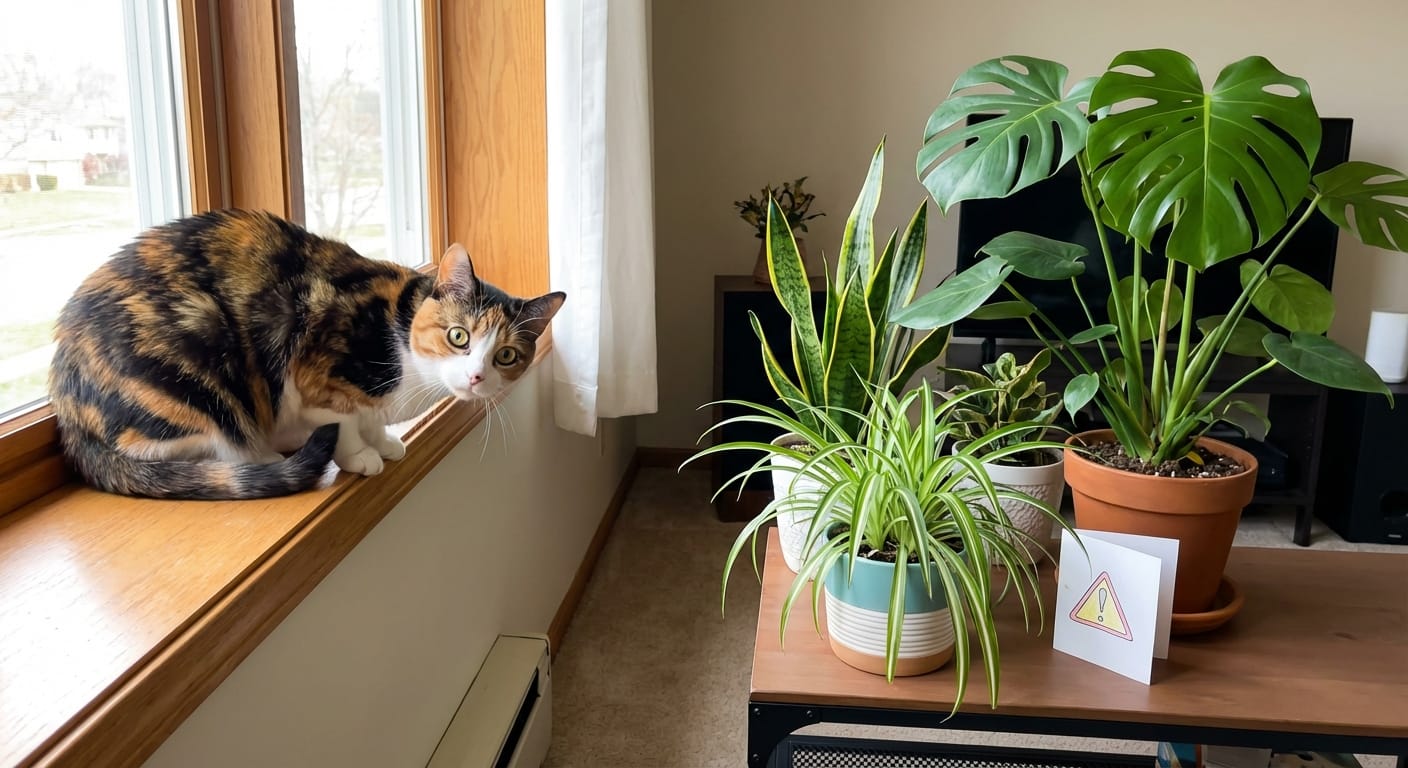
- Known or suspected ingestion of toxic plants (especially lilies — all parts are highly toxic to cats and can cause fatal kidney failure)
- Ingestion of human medications (paracetamol/acetaminophen is fatal to cats even in small doses)
- Exposure to antifreeze, rodent poison, insecticides, or household chemicals
- Ingestion of string, ribbon, thread, or tinsel (can cause life-threatening intestinal blockage)
Neurological Signs
- Seizures or convulsions
- Sudden loss of balance, walking in circles, or head tilting
- Sudden blindness
- Unresponsiveness or collapse
- Sudden paralysis (especially hind legs — can indicate a blood clot, which is extremely painful and time-sensitive)
Other Immediate Emergencies
- Not breathing or no heartbeat
- Severe vomiting or diarrhoea with blood
- Distended, hard abdomen with signs of pain
- Difficulty giving birth (straining for more than one hour without producing a kitten)
- Body temperature above 40°C / 104°F or below 37°C / 99°F
See Your Vet Within 24 Hours (Urgent)
These signs aren't immediate emergencies but shouldn't wait for a routine appointment.
- Not eating for more than 24 hours (cats are at risk of hepatic lipidosis — fatty liver disease — when they stop eating, especially overweight cats)
- Vomiting repeatedly (more than two to three times in 24 hours). For a deeper dive on vomiting causes, see our guide to cat vomiting.
- Diarrhoea lasting more than 24 hours
- Lethargy — lying still, not responding to usual stimuli
- Not drinking water for more than 24 hours
- Straining to defecate with no result
- Sudden significant weight loss
- Swelling anywhere on the body (especially abdomen)
- Limping or favouring a leg
- Excessive drooling
- Hiding excessively when this is out of character
Monitor at Home (But Watch Closely)
These situations may resolve on their own but should be watched. If they persist beyond 24-48 hours or worsen, see your vet.
- Single episode of vomiting in an otherwise healthy cat
- Mild sneezing or watery eyes (possible upper respiratory infection)
- Slight decrease in appetite with normal energy
- Soft stool (not watery diarrhoea) for one day
- Minor scratches or scrapes that aren't deep
- Occasional hairball (once every week or two)
Emergency Preparedness
Being prepared makes an emergency less chaotic. Take these steps now, before you need them:
- Save your emergency vet's details — address, phone number, and opening hours in your phone contacts. Know the route.
- Keep a cat carrier accessible — don't store it in a hard-to-reach spot. In an emergency, you need to leave quickly.
- Know your cat's baseline — normal resting breathing rate, typical weight, and usual behaviour make it easier to recognise abnormalities.
- Keep a basic pet first-aid kit — sterile gauze, medical tape, digital thermometer, saline solution, and your vet's number.
- Have your cat's medical records accessible — vaccination history, microchip number, current medications, and known allergies.
Quick Triage Reference
| Symptom | Urgency | Action |
|---|---|---|
| Open-mouth breathing at rest | EMERGENCY | Vet immediately |
| Straining to urinate (no output) | EMERGENCY | Vet immediately |
| Suspected toxin ingestion | EMERGENCY | Vet immediately |
| Seizure | EMERGENCY | Vet immediately |
| Sudden hind leg paralysis | EMERGENCY | Vet immediately |
| Not eating for 24+ hours | URGENT | Vet within 24 hours |
| Repeated vomiting (3+ times) | URGENT | Vet within 24 hours |
| Lethargy / hiding | URGENT | Vet within 24 hours |
| Single vomit, otherwise normal | MONITOR | Watch 24-48 hours |
| Mild sneezing | MONITOR | Watch 24-48 hours |
FAQ
My cat ate something they shouldn't have. Should I make them vomit?
No. Never induce vomiting in a cat without veterinary guidance. Some substances cause more damage coming back up. Contact your vet or local animal poison control immediately and follow their instructions.
How do I check my cat's breathing rate?
Count the number of breaths (one inhale + exhale = one breath) in 15 seconds while your cat is resting, then multiply by four. Normal resting respiratory rate for a cat is 20-30 breaths per minute. Anything consistently above 40 at rest is concerning.
Can I give my cat paracetamol or ibuprofen for pain?
Absolutely not. Paracetamol (acetaminophen) is fatal to cats even in small doses, and ibuprofen can cause kidney failure. Never give your cat any human medication unless specifically directed by your vet.
Related reading: Toxic Plants for Cats | Why Is My Cat Vomiting? | Monthly Health Check | All Checklists