Cats are endlessly curious, surprisingly agile, and completely unbothered by your house rules. If something can be knocked off a shelf, chewed, swallowed, or squeezed behind, a cat will find a way. Most household hazards aren't obvious until your cat discovers them for you, and that discovery can sometimes end in an emergency vet trip.
This room-by-room walkthrough helps you find and fix the most common hazards before your cat finds them first. It matters most if you're bringing a new cat home, but it's worth a repeat pass every so often even for veteran cat parents. Ours still invents new trouble in year three.
Kitchen
The kitchen packs more hazards per square metre than any other room. Hot surfaces, toxic foods, and tempting smells all in one place.
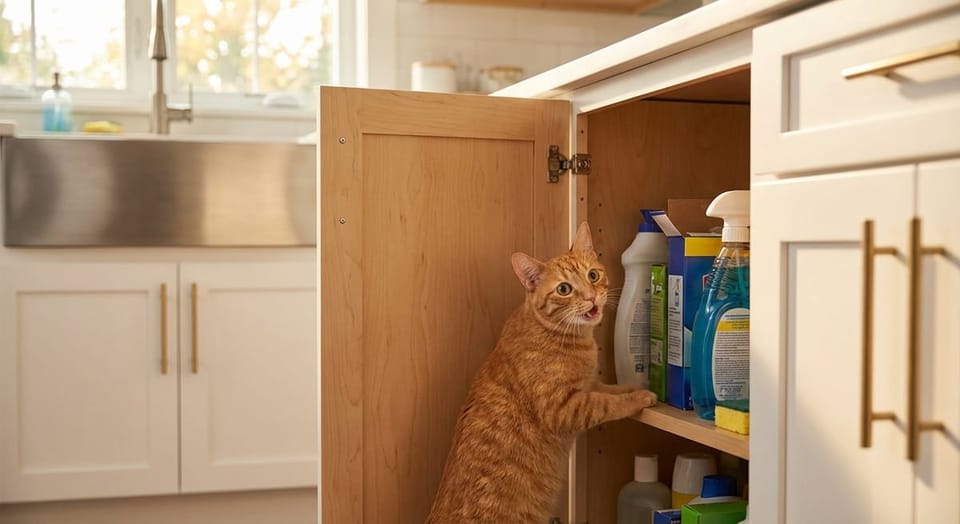
Start with the chemicals. Cleaning products, detergents, and dishwasher pods belong in closed cabinets, because cats can and will chew through packaging. If your cat has figured out how to open cabinet doors (some do, usually at 3am), child-proof locks solve it.
Then the food. Onions, garlic, chocolate, grapes, and anything containing xylitol are all toxic to cats, per the ASPCA, so don't leave them sitting on counters. The rubbish bin needs a secure lid too. Cooked bones, food packaging, and the string from meat joints are all things a cat will happily fish out and regret.
Counters themselves are a jumping destination, which makes hot burners, boiling pots, and open flames a real risk. Stove-top guards help if your cat treats the hob as a lookout point. Keep knives, skewers, and broken glass off the draining board where a paw could knock them, and always, always check the washing machine, tumble dryer, and dishwasher before starting a cycle. Cats climb into warm, enclosed spaces without telling anyone.
Bathroom
Keep the toilet lid down, especially if you use chemical cleaners or drop-in tablets, since cats will drink from the bowl given the chance. Medications need to live in a closed cabinet. Paracetamol (acetaminophen) is fatal to cats even in small doses, and ibuprofen causes kidney failure.
The small stuff is sneakier. Dental floss, hair ties, and cotton buds are irresistible to cats and can cause intestinal blockages if swallowed, so use a bin with a lid. Put razors away rather than leaving them dangling on the bath edge where a bored cat will bat at them. And drain standing water from tubs and sinks, which can be a drowning risk for kittens.
Living Room
Electrical cords come first. Chewing on live wires causes burns and electrocution, so use cord covers or tuck cables behind furniture. Our cord protector review covers the options we've actually used. Power outlets near the floor deserve attention too, particularly with kittens around (see our plug protector review).
Houseplants are the quiet danger. Lilies are the worst offender, since every part of the plant can cause fatal kidney failure in cats. Check our full toxic plants list against whatever's on your windowsill.
Blind cords and curtain strings are strangulation hazards, so tie them up high or switch to cordless blinds. Sweep the floor for small swallowable objects too. Rubber bands, coins, board game pieces, earbuds. If it fits in your cat's mouth, it's a risk. Anchor tall furniture like bookshelves and TV stands, because cats climb and an unsecured shelf can topple. One more thing people miss. Candles are an obvious open-flame risk, but many essential oils (tea tree, eucalyptus, citrus) are also toxic to cats even when diffused.
Bedroom
Cats squeeze behind wardrobes, under beds, and into gaps you didn't know existed, so block any spaces that could trap them. Earrings, hair bands, and small beads are among the most commonly swallowed foreign objects, and sewing supplies deserve their own locked drawer. Needles, pins, thread, yarn. Thread and string are among the most dangerous things a cat can swallow (vets call it a linear foreign body).
Check your window screens as well, especially above the ground floor. Cats falling from windows is common enough that vets have a name for it, "high-rise syndrome", and it's a genuine emergency category.
Laundry Room / Utility Area
Keep laundry detergent pods sealed, since the concentrated chemicals can burn the mouth and digestive tract. Pick up the buttons and coins that fall out of pockets during sorting. And check the dryer before starting it. Every single time. Warm laundry is irresistible to cats, and this one cannot be overstated.
Garage / Garden Shed
Antifreeze is the big one. Ethylene glycol tastes sweet, cats find it extremely attractive, and even a small amount is lethal, so store it sealed and up high. Fertilisers, pesticides, herbicides, and rodent poisons need the same treatment. If you use rodent bait, know that cats can be poisoned by eating a poisoned rodent (secondary poisoning), which catches a lot of owners off guard.
Cats also squeeze through openings that look far too small for them, so block access to engine bays and the space under vehicles.
General Home Safety
A few things apply to the whole house rather than one room:
- Secure all external doors and windows, especially if your cat is indoor-only. Screen doors and window locks prevent escapes.
- Remove string, ribbon, and tinsel. These cause some of the most dangerous intestinal emergencies in cats, and holidays are peak season.
- Keep the toilet lid down. Worth repeating.
- Create safe vertical spaces. Cats feel secure when they can climb, so cat trees, shelves, or cleared high surfaces stop them improvising on unsafe furniture.
- Make sure your cat has a safe hiding spot. A covered bed, a box, or a quiet corner to retreat to, especially in busy households.
Cat-Proofing Quick Reference by Room
| Room | Top Three Priorities |
|---|---|
| Kitchen | Secure chemicals, lock bins, check appliances before use |
| Bathroom | Lock away medications, secure small items, toilet lid down |
| Living Room | Cover cords, remove toxic plants, anchor furniture |
| Bedroom | Secure small objects, check window screens, block gaps |
| Laundry | Check dryer before use, secure detergent, clear small items |
| Garage | Lock away antifreeze, secure chemicals, block gaps |
FAQ
Do I need to cat-proof my entire home before bringing a cat home?
Focus on the "safe room" first, the small quiet room where your cat will spend their first few days. Then work through the rest of the house room by room before expanding your cat's access. Our New Cat Owner Starter Checklist walks through the full settling-in process.
My cat keeps chewing on cords. What should I do?
Cord covers are the most reliable fix. Bitter sprays work for some cats but not all (ours licked it off, undeterred). More importantly, provide appropriate chew alternatives and interactive play to redirect the behaviour. Cord chewing can also sometimes point to dental discomfort, so mention it at your next vet visit.
Are essential oils safe around cats?
Many are not. Tea tree, eucalyptus, peppermint, cinnamon, citrus, and several other essential oils are toxic to cats, who lack certain liver enzymes needed to metabolise these compounds. If you use a diffuser, research each oil carefully and make sure the room is well ventilated with an exit for your cat.
Related reading: Toxic Plants for Cats | Emergency Signs Checklist | New Cat Owner Starter Checklist | All Checklists
💡 Some links are affiliate links — the cat gets treats, you pay nothing extra.