Disclaimer: This article is for informational purposes only and is not a substitute for professional veterinary advice. Always consult your veterinarian for health concerns about your cat.
Cats are masters at hiding discomfort. By the time most cat parents notice something is wrong, the problem has often been developing for weeks or months. A simple monthly check-up at home — taking just 10 to 15 minutes — can help you catch changes early, when they're usually easier (and less expensive) to treat.
This isn't a replacement for annual vet visits. Think of it as the cat equivalent of checking your car's oil between services.
The Monthly Check: Head to Tail
Pick a time when your cat is relaxed — after a meal or a play session works well. Keep treats nearby for positive associations. If your cat resists any area, note it and try again tomorrow. Forcing it creates stress for both of you.
Eyes
- Should be clear, bright, and equally sized
- Check for discharge, cloudiness, redness, or swelling
- Third eyelid (nictitating membrane) should not be visible when your cat is alert
- Flag for vet: persistent discharge, unequal pupil sizes, visible third eyelid, squinting
Ears
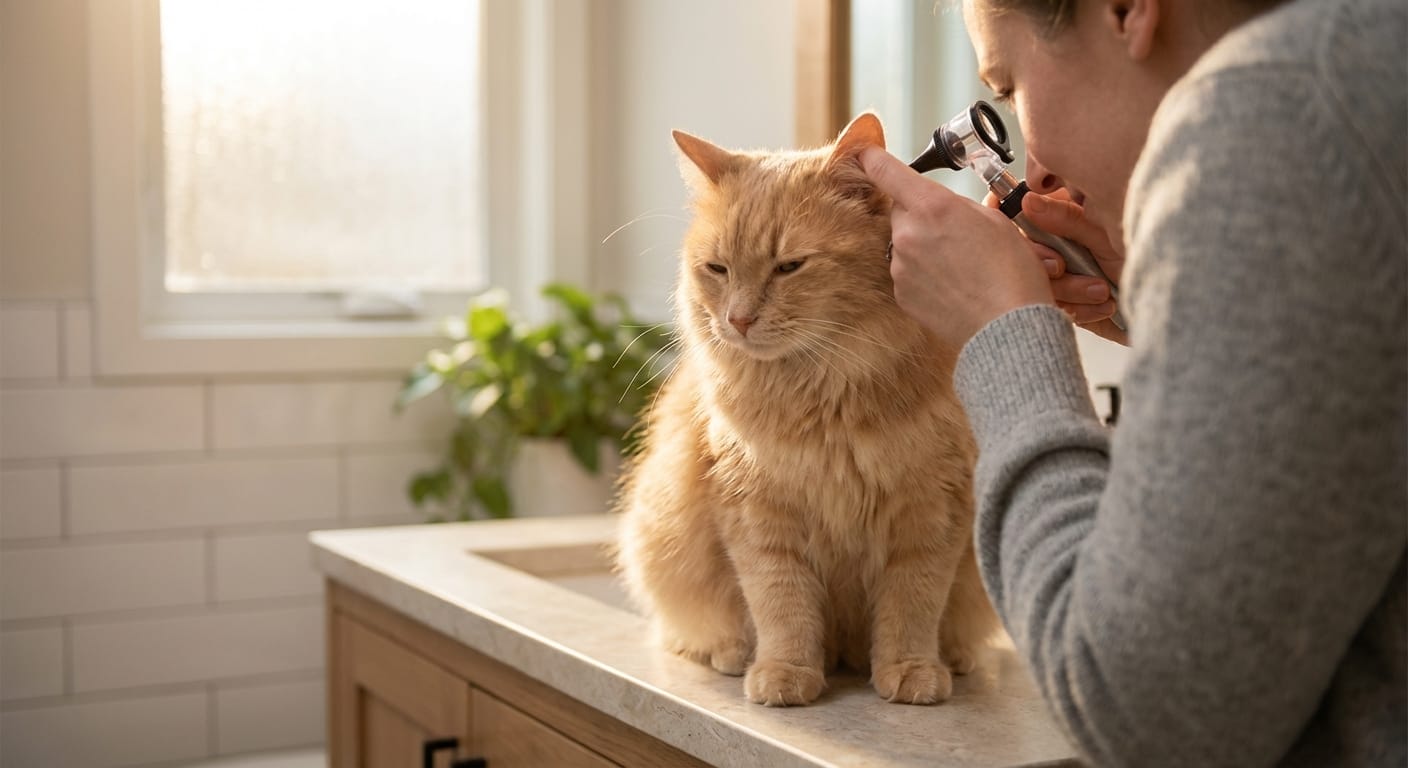
- Inside should be pale pink with minimal wax
- Sniff gently — healthy ears have no strong odour
- Check for dark debris (possible ear mites), redness, or swelling
- Flag for vet: foul smell, excessive dark wax, head shaking, scratching at ears
Mouth and Teeth
- Gums should be pink (not white, red, or yellow)
- Teeth should be white without heavy tartar buildup (brownish-yellow deposits)
- Check for broken teeth, red gum lines, or sores
- Smell your cat's breath — mild fish is normal; strong, foul odour is not
- Flag for vet: drooling, difficulty eating, red or bleeding gums, bad breath. According to the AVMA, 70% of cats show signs of dental disease by age three.
(For more detail, see our Cat Dental Care Routine Checklist.)
Coat and Skin
- Run your hands over the entire body — feel for lumps, bumps, or sore spots
- Coat should be smooth and clean (within breed norms)
- Part the fur and check the skin for flaking, redness, scabs, or parasites
- Check for bald patches or excessive hair loss
- Flag for vet: new lumps (even if small), sudden hair loss, persistent scratching, visible parasites
Weight
- Weigh your cat monthly on a bathroom scale (weigh yourself holding the cat, then subtract your weight)
- You should be able to feel ribs without pressing hard, but not see them
- Look from above — there should be a visible waist behind the ribs
- Track weight over time. A change of 0.5 kg / 1 lb in a month is significant for a cat
- Flag for vet: unexplained weight loss or gain. Weight loss is especially concerning and can indicate kidney disease, hyperthyroidism, diabetes, or other conditions.
Nails
- Check length — indoor cats may need trimming every two to four weeks
- Look for cracked, split, or overgrown nails
- Check dewclaws (inner "thumbs") as these don't wear down naturally
- Flag for vet: nails growing into paw pads, redness or swelling around nail bed
Mobility
- Watch your cat walk, jump, and climb as they normally would
- Any stiffness, limping, or reluctance to jump may signal pain. According to the Journal of Feline Medicine and Surgery, 90% of cats over 12 show signs of arthritis on X-ray.
- Note changes in how high they jump or which surfaces they avoid
- Flag for vet: limping, difficulty jumping onto favourite spots, stiffness after rest
Monthly Health Check — Quick Reference
| Area | What to Check | Red Flags |
|---|---|---|
| Eyes | Clarity, equal size, no discharge | Cloudiness, squinting, unequal pupils |
| Ears | Pink inside, minimal wax, no odour | Dark debris, foul smell, head shaking |
| Mouth | Pink gums, clean teeth, mild breath | Red gums, tartar, bad breath, drooling |
| Coat/Skin | Smooth coat, no lumps, no parasites | Bald patches, new lumps, flaking |
| Weight | Stable month to month, ribs palpable | Sudden loss or gain (0.5 kg / 1 lb+) |
| Nails | Appropriate length, no cracks | Overgrown, ingrown, swollen nail bed |
| Mobility | Normal gait, willing to jump | Limping, stiffness, avoiding heights |
Behaviour Changes to Watch For
Your monthly check is also a good time to reflect on any behaviour shifts over the past four weeks:
- Eating and drinking — eating more or less? Drinking significantly more water? Increased thirst can signal kidney disease or diabetes.
- Litter box habits — going more or less often? Straining? Changes in stool consistency?
- Energy levels — more lethargic or more restless than usual?
- Hiding — a cat that suddenly hides more may be in pain or unwell.
- Vocalisation — yowling at night, especially in senior cats, warrants a vet check.
Annual Vet Visit vs. Monthly Home Check
Your monthly home check does not replace professional veterinary care. Here's how they complement each other:
- Monthly at-home check: Catch visible changes early. Build a baseline of what's normal for your cat.
- Annual vet visit: Blood work, dental assessment, vaccination boosters, and full physical exam. Senior cats (seven years and older) benefit from twice-yearly visits.
FAQ
My cat won't let me check their mouth. What should I do?
Start slowly. Touch their chin, then lips, and reward with a treat each time. Over several sessions, most cats will tolerate a brief lip lift. If your cat truly resists, leave the dental check to your vet — but watch for signs like bad breath, dropping food, or pawing at the mouth.
How do I know what's "normal" for my cat?
That's exactly why monthly checks matter. By looking at the same areas regularly, you build a mental baseline. The first month or two might feel uncertain, but you'll quickly learn what's typical for your individual cat.
How often should I take my cat to the vet?
Healthy adult cats should see a vet at least once a year. Kittens need more frequent visits for vaccinations. Senior cats (seven years and older) benefit from check-ups every six months.
Related reading: The Ultimate Cat Health Checklist | Cat Emergency Signs Checklist | Dental Care Checklist | All Checklists