We've all stood in the pet shop aisle staring at fifty different bags and pouches, every one of them claiming to be "the best." Then someone online tells you dry food is terrible, someone else swears by raw, and a third person mutters something about grain-free. It's a lot.
This checklist covers the fundamentals of feline nutrition. What to feed, how much, how often, and what to watch for, so you can pick a food and stop second-guessing yourself at dinner time.
Choosing the Right Food
What to Look For on the Label
Turn the bag over and read the ingredients before the marketing. The first ingredient should be a named protein, so "chicken," "salmon," or "turkey" rather than vague "meat by-products" or "animal derivatives."
Next, look for a "complete and balanced" statement, which means the food meets established nutritional standards for your cat's life stage. In many regions this is regulated by bodies like AAFCO (US), FEDIAF (Europe), or an equivalent organisation. The life stage part matters too. Kittens need higher protein and calories, and senior cats may need adjusted formulas, so match the food to the cat you actually have.
On protein numbers, AAFCO minimums are 26% for adults and 30% for kittens, though plenty of quality foods exceed that. And check that taurine is included. It's an essential amino acid for cats, and without it they develop heart disease and vision problems. All complete commercial cat foods include it, but it never hurts to see it on the label.
Wet Food vs. Dry Food
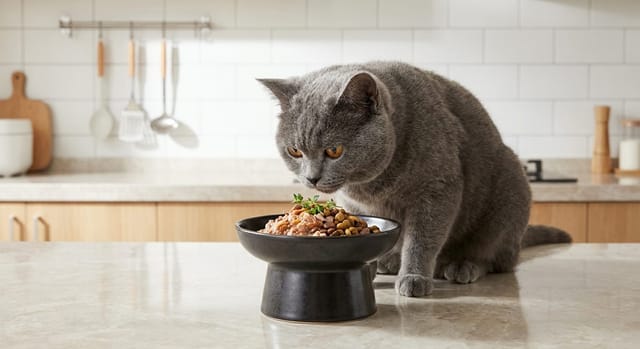
Wet food is typically 75-80% moisture (PetMD), which makes it excellent for hydration. It's easier to chew, often higher in protein and lower in carbohydrates, and it spoils faster once opened. Dry food is the convenient, cost-effective option. It stores easily, but it typically runs 20-30% carbohydrates (Cornell) and does little for hydration.
Many vets recommend a mix of both, and that's what we do at home. Wet food provides the moisture, dry food covers the convenience. The hydration piece is worth taking seriously, because cats on wet-food diets have been shown to have 40% fewer urinary tract incidents compared to dry-only diets (Journal of Feline Medicine).
Portion Sizes and Feeding Schedule
How Much to Feed
There's no universal answer here. Portions depend on your cat's weight, age, activity level, and the specific food, so start with the manufacturer's feeding guide and adjust from there. An average adult cat (4-5 kg / 9-11 lbs) needs roughly 200-300 calories per day, but check your food's calorie content, because it varies more than you'd expect.
Weigh portions on a kitchen scale rather than scooping by eye. "One scoop" varies wildly, and the extra ten grams a day add up. To judge whether you've got it right, feel for your cat's ribs. You should be able to feel them without pressing hard. Ribs you can see may mean underweight; ribs you can't find at all suggest the opposite. According to the Association for Pet Obesity Prevention, 61% of cats are overweight or obese, so this is the checkpoint most of us need.
How Often to Feed
- Kittens up to 6 months: three to four meals per day
- Kittens 6-12 months: two to three meals per day
- Adult cats: two meals per day, morning and evening, is most common
- Senior cats: two meals per day, or smaller, more frequent meals if appetite has dropped
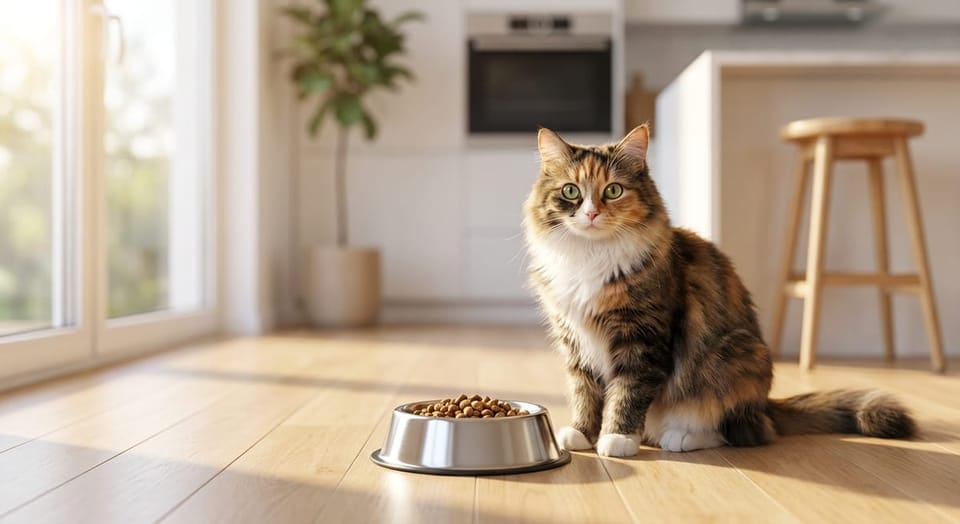
Free-feeding, where dry food sits out all day, is possible. It also makes it harder to monitor intake and tends to encourage overeating, so timed meals are the better habit. Most cats will happily remind you when one is due.
Hydration
Cats evolved in arid environments and came out of it with a low thirst drive. Many cats just don't drink enough, especially on dry-only diets. The rough target is 3.5-4.5 oz (100-130 ml) of water per 2.3 kg / 5 lbs of body weight daily (PetMD).
A few things help. Change the water at least once a day, and set up bowls in more than one room, away from the food, since cats prefer to drink at a distance from dinner. Wide, shallow bowls beat deep ones, because many cats dislike their whiskers touching the sides (whisker fatigue is a real thing). A water fountain can significantly increase intake, as many cats prefer moving water. And wet food remains the easiest hydration boost of all for a cat who won't drink.
Treats and Extras
The widely accepted guideline from veterinary nutritionists is that treats should make up no more than 10% of daily calories. That's a smaller allowance than those pleading eyes will suggest.
Skip human food as treats. Onions, garlic, chocolate, grapes, and anything containing xylitol are all toxic to cats (ASPCA). Read treat labels with the same scrutiny you give the main food, since even cat treats vary widely in quality. Then spend the treat budget where it earns its keep, like training, bonding, or rewarding your cat for tolerating a brush and a nail trim.
Foods to Avoid (Toxic to Cats)
| Food | Why It's Dangerous |
|---|---|
| Onions and garlic | Damage red blood cells, causing anaemia |
| Chocolate | Theobromine is toxic; dark chocolate is worst |
| Grapes and raisins | Can cause kidney failure |
| Xylitol (artificial sweetener) | Causes dangerous drop in blood sugar and liver failure |
| Alcohol | Even small amounts can be fatal |
| Caffeine | Stimulates the heart and nervous system to dangerous levels |
| Raw eggs | Risk of Salmonella; avidin in raw whites impairs biotin absorption |
| Cooked bones | Can splinter and cause internal injuries |
For a comprehensive list, see our toxic plants guide. As far as a curious cat is concerned, plants are food too.
Nutrition Quick Reference
| Topic | Guideline |
|---|---|
| First ingredient | Named protein (chicken, salmon, etc.) |
| Adult protein minimum | 26% (AAFCO) |
| Meals per day (adult) | Two (morning and evening) |
| Treat limit | No more than 10% of daily calories |
| Water bowls | Multiple locations, away from food |
| Wet food moisture | 75-80% |
| Monitor | Weight monthly, body condition score |
FAQ
Is grain-free food better for cats?
Not necessarily. Cats are obligate carnivores, so protein is the priority, and most cats digest grains without any trouble. The grain-free trend was largely driven by marketing. Unless your cat has a diagnosed grain allergy, which is rare, standard quality food is fine.
Should I feed raw food?
Raw diets are controversial. Proponents cite benefits like shinier coats and smaller stools, but veterinary bodies including the AVMA caution against raw feeding due to the risks of Salmonella, E. coli, and nutritional imbalance. If you do choose raw, work with a veterinary nutritionist to make sure the diet is complete.
How do I switch my cat to a new food?
Gradually, over seven to ten days. Start with 75% old food and 25% new, then shift the ratio every two to three days. A sudden swap is the classic cause of a midnight surprise on the carpet.
Related reading: British Shorthair Nutrition Basics | Monthly Health Check | All Checklists
💡 Some links are affiliate links — the cat gets treats, you pay nothing extra.