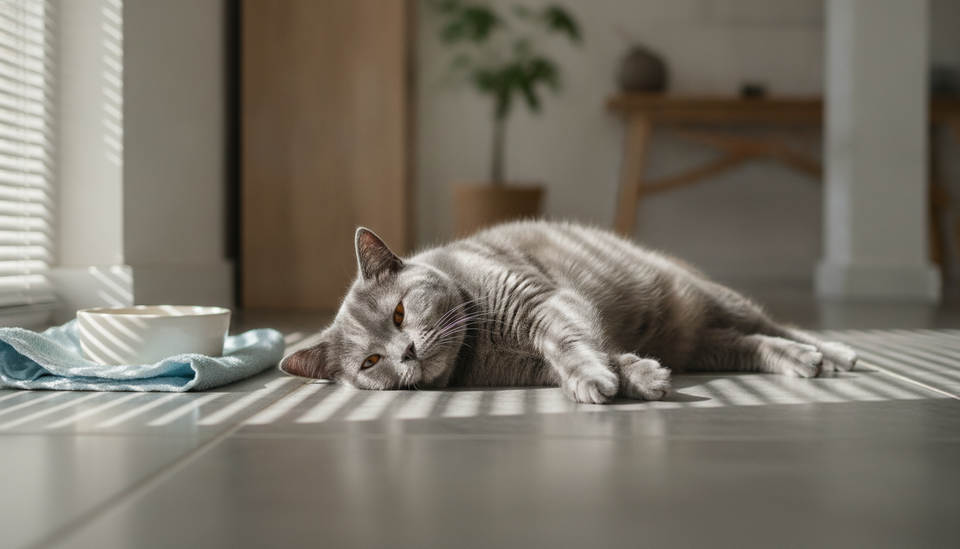
When a heatwave rolls in, you can pour yourself something cold, park in front of the fan and complain to anyone who'll listen. Your cat can't do any of that. And if you live in a normal European flat, there's no air conditioning riding to the rescue either. We've spent enough July afternoons watching our own cats melt into the bathroom tiles to have opinions on this, so here is what actually helps.
Your Fan Is Mostly for You
A fan feels wonderful to us because moving air evaporates sweat off our skin. Cats barely sweat. They have a few sweat glands in their paw pads, chin and lips, and that's about it. Point a fan at a cat and you're mostly just annoying it.
What cats do instead is groom. The saliva they spread over their coat evaporates and takes heat with it, which works surprisingly well. A fan can support that by keeping air moving around the room, so it's still worth running one. Just don't aim it straight at the cat, and don't assume it's doing much on a properly hot day. Our trick in July is a bowl of ice in front of the fan. Cheap, slightly ridiculous, works.
Make One Room Properly Cool
Cats will find the coolest spot in your home without any help. Your job is making sure a cool spot exists at all.
Close the blinds on the sunny side before the day heats up, not after. A shaded room stays several degrees cooler and your flat never turns into a greenhouse in the first place. Open windows early in the morning and late in the evening for a cross-draught, then shut everything around midday when the air outside is hotter than inside. One warning if you have tilt windows: a curious cat can get badly stuck in one, so keep them secured.
Then look at your floors. Bathroom and kitchen tiles are prime summer real estate, so roll up the rugs and let the cat claim the ground. Heat rises, and the floor really is the coolest part of the room. If your cat normally sleeps at the top of their cat tree, expect them to abandon the penthouse for a while. Ours did exactly that with the Natural Cat Tree, and suddenly the lowest platform was the most contested spot in the house.
Water, in More Places Than You Think
Hydration does more for a hot cat than any gadget, and cats are famously lazy drinkers. Spread several water bowls around the home, and keep them away from the food bowl and the litter tray. Plenty of cats simply drink more when the water has its own spot. We noticed a real difference after moving to a raised bowl setup with the water station on its own.
An ice cube in the bowl keeps the water cold, and some cats will fish for it first, which is entertainment and cooling in one. Wet food helps too, since it carries a decent amount of fluid. If your cat refuses anything but dry food, stir in a spoonful of water.
Small Things That Help More Than They Should
Brush your cat every day during a heatwave. Dead undercoat traps heat, and a few minutes with the brush takes a lot of it off. Don't shave them though. The coat insulates against heat as well as cold, and a shaved cat can burn.
You can also stroke them with a barely damp cloth, which imitates how grooming cools them down. Most cats tolerate this far better than anything involving actual water. A cooling mat, or an ice pack wrapped in a thin towel, gives them a chilled option. Let the cat decide whether to use it. Forcing a cat onto anything cold ends the way most forcing of cats ends.
And if you want to earn some points: freeze a spoonful of wet food or a lickable treat. It's the feline version of an ice cream on a hot day.
When Warm Becomes Dangerous
Most cats get through hot days just fine with shade and water. The reason to pay attention is that heat exhaustion can turn into heatstroke in under half an hour.
Sprawling on the tiles, sleeping more, grooming a bit more than usual: all normal. Restlessly wandering in search of cooler spots, sweaty paw prints on the floor, drooling, breathing noticeably faster: those are early warnings. Move your cat to the coolest room, offer water and keep watching.
Open-mouth breathing or panting is different. Dogs pant all summer; cats almost never do, and a panting cat is a red flag. Same for bright red or purple gums, vomiting, wobbliness or collapse. At that point you're in heatstroke territory, where organ damage starts once body temperature passes about 40 °C, and it's a vet emergency. Cool them gently on the way with lukewarm-to-cool water on paws and belly, never ice-cold water, which can trigger shock. PetMD's guide to heatstroke in cats covers the symptoms in more depth, and Blue Cross has a good summer checklist.
Cool Cat, Calm Summer
No air conditioning required. Shade before the heat arrives, moving air, water in several places, and a floor the cat is allowed to own. Do the simple things early in the day and watch for the warning signs. Your cat will handle the rest, mostly by locating the one genuinely cool square metre in your home and refusing to share it.
💡 Some links are affiliate links — the cat gets treats, you pay nothing extra.