Laser pointers are a go-to toy in a lot of cat households, ours included, because they offer a quick and engaging way to play without leaving the sofa. Watching your cat chase that elusive red dot is both hilarious and mesmerizing. But are laser pointers really all they're cracked up to be? As with most things in the cat world, the answer is nuanced. Let's look at the benefits, the real risks, and exactly how to use laser pointers so your cat stays happy, healthy, and frustration-free.
Why Cats Go Crazy for Laser Pointers
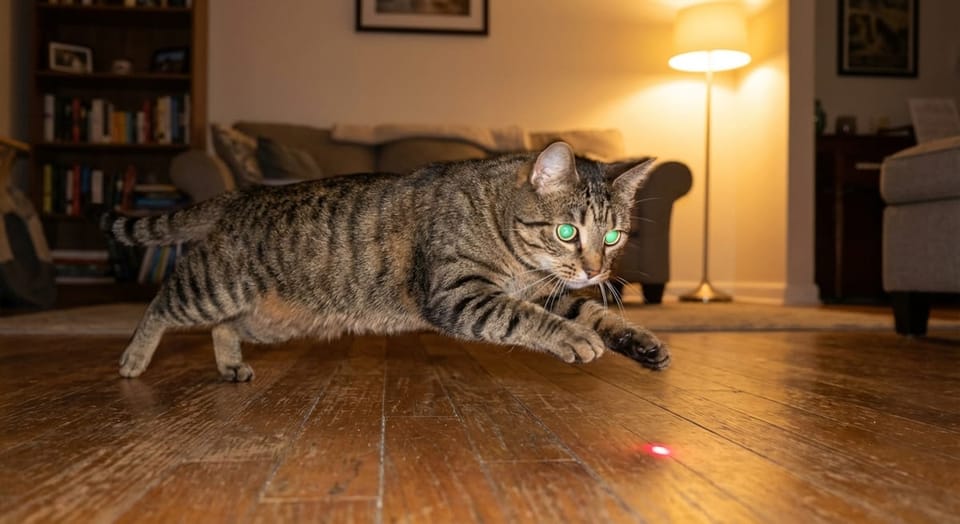
Cats are natural-born hunters, and a laser pointer taps directly into those hardwired instincts to stalk, chase, and pounce. The bright, erratically moving dot mimics the movement of prey like insects, lizards, or small rodents, and it triggers your cat's predatory sequence almost instantly.
For high-energy cats, a laser session is a fantastic way to burn off steam, especially for indoor cats who never get real hunting opportunities. Even older or less active cats often can't resist a well-timed dot darting across the floor. The exercise helps maintain a healthy weight, the interactive play strengthens your bond, and even shy or timid cats tend to engage quickly. All of that while you sit in your chair holding a tiny button. It's easy to see the appeal.
The Real Risk: Frustration and Obsessive Behaviour
Laser pointers differ from every other cat toy in one important way. Your cat can never catch the dot. And that matters more than most people realise.
A cat's hunting sequence has a beginning, middle, and end: spot prey, stalk, chase, pounce, catch, kill, eat. A laser pointer delivers the first stages perfectly, but the catch and the reward never come. Over time, this can lead to real frustration, anxiety, or even compulsive behaviour in some cats.
What does laser-related frustration look like? A cat that keeps staring at walls or floors long after play has ended. Compulsive chasing of shadows, lights, or reflections. Seeming agitated or unsettled rather than relaxed after a session. Some cats show redirected aggression, swatting at you or other pets after play, and others get noticeably more vocal around play time.
None of this means laser pointers are off the table. It means how you end a session matters enormously.
The Golden Rule: Always End with a Physical Catch
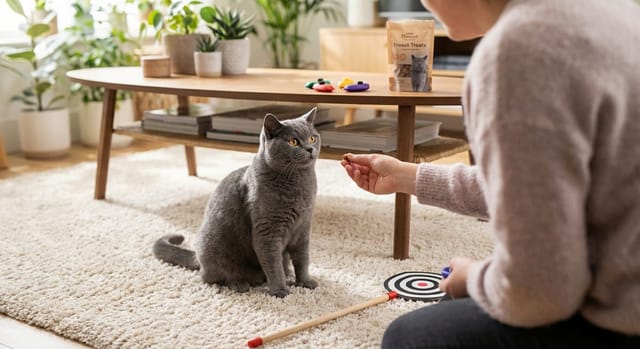
The single most important thing you can do with a laser pointer is to always end the session by guiding the dot onto a physical toy your cat can catch. A stuffed mouse, a crinkle ball, or a small piece of kibble works perfectly. This completes the hunting sequence, gives your cat that crucial sense of accomplishment, and prevents the frustration loop.
Think of it as the difference between watching a whole film and having it cut out five minutes before the ending. You'd be annoyed too.
How to Use Laser Pointers Safely
Used thoughtfully, laser pointers are perfectly fine. A few ground rules keep it that way:
- Keep sessions short. 5–10 minutes is plenty, and longer sessions increase the risk of overstimulation.
- End with a tangible reward. Guide the dot onto a toy your cat can physically catch and "kill". Always.
- Never shine the beam in the eyes. Even pet-safe laser pointers can cause retinal damage if pointed directly at eyes, so keep the dot on the floor and walls only.
- Choose a low-powered pointer, meaning Class 1 or Class 2 lasers under 5mW. Avoid the high-powered pointers sold for presentations.
- Watch body language. If your cat looks stressed, stops engaging, or seems agitated, end the session immediately.
- Don't use it every day. Rotate laser play with other toy types so your cat doesn't fixate.
- Vary the movement. Slow, stalking movements mimic real prey far better than frantic zigzagging, and cats find them more satisfying.
Choosing the Right Laser Pointer
Not all laser pointers are created equal. Stick to Class 1 or 2 lasers, which are safe power levels for pet play, and avoid anything above 5mW. Beam colour matters less than you'd think, though green is actually more visible to cats than red, and both work well.
Battery-powered automatic laser toys rotate and move the dot for you, which is handy for solo play, though you should still supervise and end sessions properly. And don't overlook the grip. You'll be waving this thing around for ten minutes at a stretch, so ergonomics matter more than the packaging suggests.
Great Alternatives to Laser Pointers
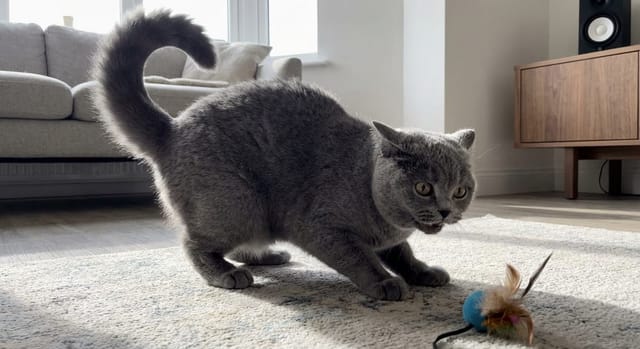
If you'd rather skip the laser entirely (totally valid), plenty of toys offer similar stimulation with zero frustration risk. Feather wand toys mimic bird movement and are very satisfying to catch. The Da Bird wand makes a realistic wing sound that sends most cats wild. Puzzle feeders channel hunting instincts through food, which cats find deeply satisfying, while crinkle balls are light, unpredictable, and eminently catchable. Remote-controlled mice might be the best of both worlds, laser-like control paired with a physical toy your cat can actually sink claws into.
FAQ
Are laser pointers bad for cats?
Not inherently, but they can cause frustration and anxiety if sessions never end with a physical catch. Used correctly (short sessions, always ending with a tangible toy reward, never pointed at eyes), laser pointers are a safe and enjoyable enrichment tool.
Why does my cat stare at the wall after laser play?
This is a sign of lingering frustration. Your cat's brain is still in "hunt mode", searching for the prey it never caught. Try ending sessions more deliberately with a physical toy catch, and consider shortening future sessions. If wall-staring becomes obsessive, take a break from laser pointers for a few weeks.
Can I leave my cat alone with an automatic laser toy?
Supervised sessions are always better, but automatic laser toys are generally fine for short periods as long as your cat has physical toys nearby to "catch" when the session ends. Look for models with auto-off timers, and check in on your cat's body language regularly to make sure they're enjoying it rather than becoming fixated.
Laser pointers are a bit like caffeine. Great in moderation, problematic in excess, and entirely fine once you understand how to use them responsibly. For cats like Zoe and Nala, a well-structured laser session followed by a good toy "kill" and a treat is the perfect afternoon energy reset. Get the ending right, and your cat will love you for it.
💡 Some links are affiliate links — the cat gets treats, you pay nothing extra.