If British Shorthairs could talk, they'd probably use the Queen's English and speak with an air of quiet dignity. Since they communicate in subtler ways, it's up to us humans to decode their body language. Learning to read their signals deepens your bond and helps you respond to their needs with royal precision. Think of it as learning a new language, one made of flicking tails and twitching whiskers.
The Tale of the Tail: Decoding Tail Movements
A British Shorthair's tail is like a mood ring, giving away their feelings in small ways. Watch it closely and it reveals a lot about their emotional state.
| Tail Position | Meaning | What to Do |
|---|---|---|
| Straight Up with Curl | Happy and confident, feeling social | Head scratches and treats welcome |
| Low and Still | Caution or uncertainty | Give them time to adjust |
| Puffed Up | Startled or frightened, high alert | Remove stressors, offer reassurance |
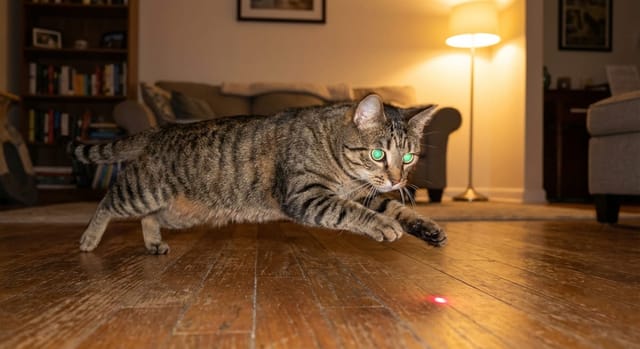
| Flicking / Swishing | Irritation or hunting mode | Stop what you're doing or grab a toy |
Fun Fact
British Shorthairs rarely lash out physically. Instead, their swishing tail is like a royal decree that says, "Kindly step back, human." Respect it, and all will remain well in their kingdom.
Ears, Eyes, and Whiskers: The Subtle Signs
Your cat's face is a treasure trove of emotional clues. The position of their ears, the state of their eyes, and the movement of their whiskers all tell you what's on their mind. Here's how to interpret those quieter expressions:
| Body Part | Signal | Meaning |
|---|---|---|
| Ears | Forward | Relaxed and curious |
| Ears | Flat or Back | Fear, irritation, or discomfort |
| Ears | Swiveling | High alert, tracking sounds |
| Eyes | Slow Blinks | Trust and affection, "I feel safe" |
| Eyes | Dilated Pupils | Excitement, fear, or high energy |
| Eyes | Narrowed | Contentment or intense focus |
| Whiskers | Forward | Excitement or curiosity |
| Whiskers | Flat Against Cheeks | Fear, stress, or submission |
The Power of Posture
Posture fills in the rest of the picture. How your British Shorthair sits, stands, or moves says plenty about their mood and intentions:
| Posture | Meaning | Note |
|---|---|---|
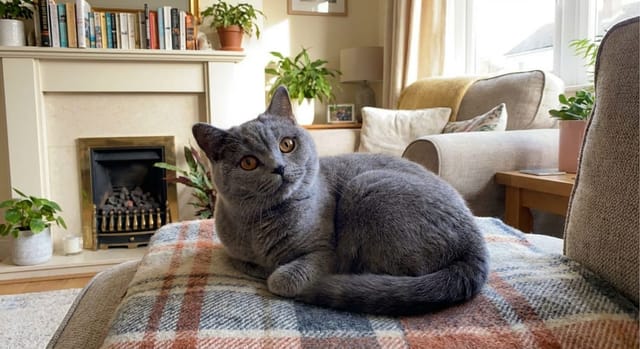
| Relaxed / Lounging | Content and happy | Sprawled out, paws tucked, eyes half-closed |
| Standing Tall | Mild curiosity or readiness | The feline "standing at attention" |
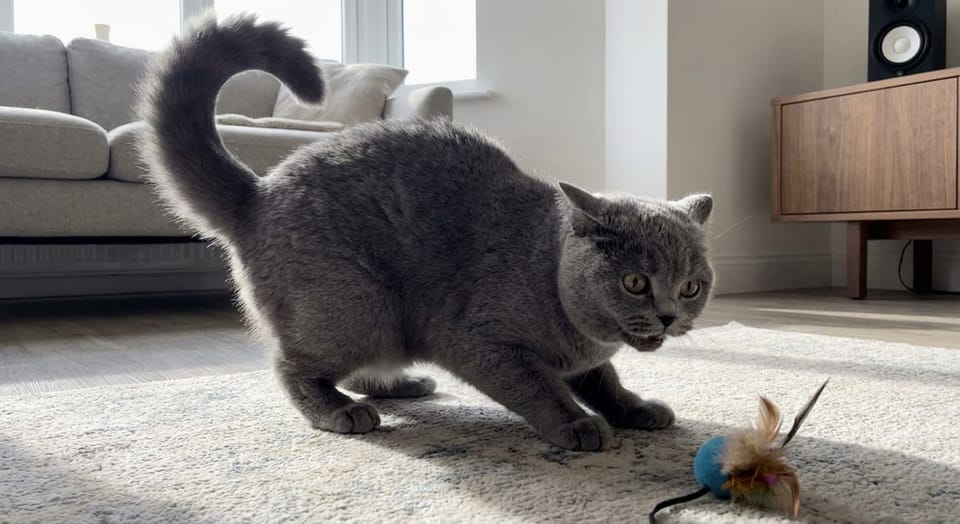
| Crouching Low | Unease or preparing to pounce | Still tail = assessing; twitching = about to act |
| Rolling Over | Trust (belly exposed) | Not always an invite for belly rubs! |
Fun Fact
British Shorthairs are masters of the "loaf" position, paws tucked neatly under the body. It signals relaxation and comfort, and it's irresistibly cute.
Vocalizations: Adding Sound to the Signals
This post focuses on body language, but it's worth noting that British Shorthairs aren't especially vocal cats. When they do meow, it's usually soft and purposeful. Pair the sound with the body language and you get a much fuller picture of their mood.
Building a Stronger Bond
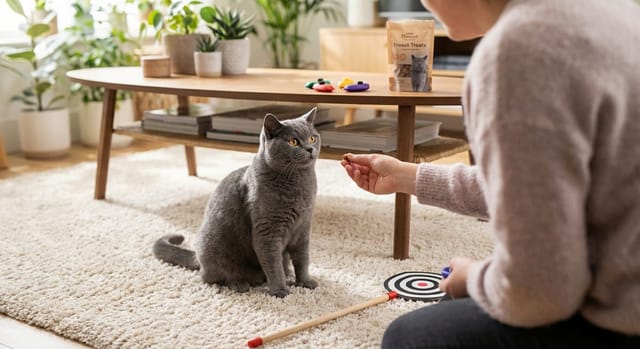
The more you pay attention to these small signals, the easier life together becomes. Over time you'll start anticipating their needs before they have to ask, a skill that earns you their respect and maybe even a head bump of approval.
Final Thought
Reading your British Shorthair can feel like solving a puzzle at first. Stick with it and you'll become fluent in their language of tails, ears, and whiskers. Ours still catches us second-guessing now and then. Was that a slow blink, or are they just being dramatic? Either way, you're in for a lifetime of love and laughter with your fluffy companion.
In our final post in this series we cover Lifelong Care for Your British Shorthair: Tips for the Long Haul.
💡 Some links are affiliate links — the cat gets treats, you pay nothing extra.